



You decide to go low budget on branding, thinking you’re being rational. Congrats, you just bought yourself a ticking problem with a 6-digit loss.
There is a very thin line between branding, speed, and price. And this line makes it look like cheap designs are safe enough to scale your brand. In truth, it only leads to even bigger expenses.
Want to know how? Let’s unpack why shortcuts in branding are the silent killer of company growth.
The most expensive thing about branding is low-cost branding
When someone says they want “affordable branding,” they usually mean, “We just need something for now.” Something to put on the website or to add to the pitch deck—good enough to make an impression.
The problem is that “something for now” is a situationship, not a commitment. Yet you’re committing to something as unstable as crypto prices.
Let’s say you start with a templated logo in Canva and then use it on the website. Your product UI references it. You scale and make more decks—all next sales materials inherit it. You launch on LinkedIn and design all content around it. And suddenly, your entire company is built on top of something you never meant to keep. Something you treated as a draft turns out to be the version 1.0 of your identity.
When the brand foundation is weak, every layer built on top of it compounds the problem. This is why startups often end up paying for branding twice (sometimes, even more): once for the cheap version, and later for the real one.
Ask anyone who has gone through a major startup rebrand after raising a Series A. The cost doesn’t stop at the new guidelines—it includes rebuilding marketing assets, updating the product UI, reworking messaging, retraining teams, and rebuilding brand awareness. Double it and give it to the next person, right?
Why low-cost branding usually means templates (and AI)
If a proper full brand identity takes 160–300 hours to develop, the math of a $5K branding project quickly becomes clear. Something has to give. Spoiler: it’s not the workload but strategic thinking.
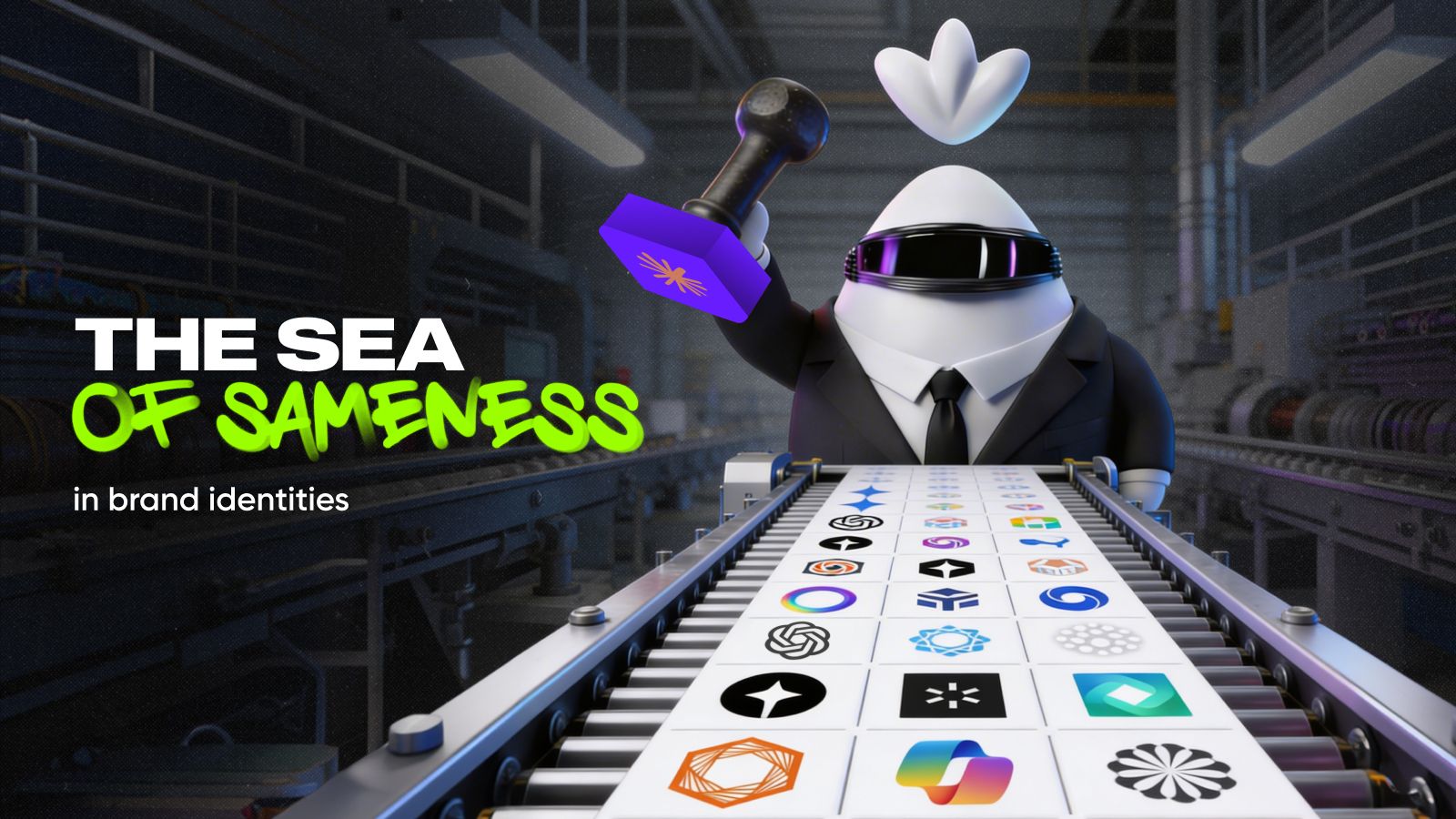
Low-cost branding projects typically rely on a pre-cooked assets combo: template logo structures, stock illustrations, free typography pairings, or, God forbid, even ready design systems (pulled from marketplaces like Envato). Designers remix them just enough to avoid looking identical.
Maybe the result looks fine, but will it actually stand out? This is why so many SaaS startups end up looking like distant cousins: same typographic logo, same stock human graphics, and same blue-purple gradients. Scroll through product launches on platforms like Product Hunt, and you’ll catch dozens of twins immediately.
AI has accelerated this trend dramatically. Tools can now generate logos, color palettes, and entire “brand kits” in minutes. Something good for early prototypes also means the same design assets shared across thousands of companies.
“But AI is getting better, no one can tell what’s generated!” Trust us, the market remembers. When every startup looks like every other, differentiation disappears—and the entire point of branding is gone.
Branding is an investment that pays off
And not in long-term marketing theory. Branding shows up in very concrete business metrics: pricing power, revenue growth, operational efficiency, and the ability to scale without chaos. Here’s how it can pay off.
Great brands can charge more
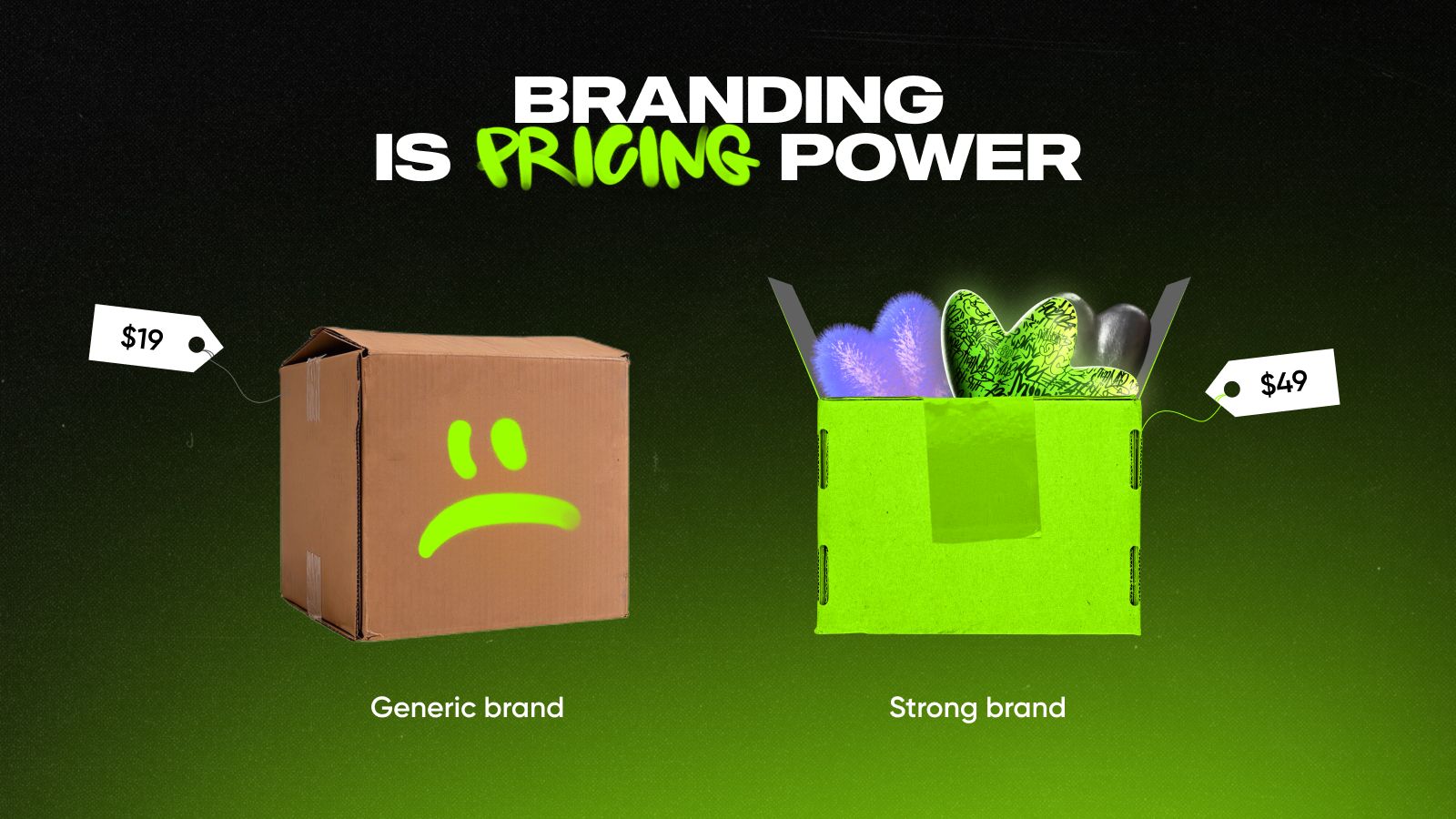
Customers aren’t robots; they don’t evaluate your product purely rationally. They look for signals—trust, credibility, perceived quality—and branding plays a huge role in that. When your company looks confident and one-in-a-million, people assume the product behind it must be top-tier too.
In competitive markets, especially when inflation is gnawing at wallets and every dollar counts, this emotional shortcut matters even more. A thoughtful brand builds connection, communicates credibility, and makes decisions easy. Basically, it greases the buying gears.
That perception translates directly into price tolerance. According to The Language of Effectiveness 2025 report, 58.9% of marketers agree that their company can charge higher prices because the brand seems stronger than competitors.
Branding drives revenue growth
A well-defined brand strategy clarifies positioning and messaging, making a company easier to recognize and remember. That clarity affects everything: marketing performance, sales conversations, and customer retention.
Research summarized in Harvard Business Review reveals that companies with defined brand strategies can expect 10–20% revenue growth. And it makes sense: clear positioning strengthens long-term value.
If every campaign reinforces the same idea, you build recognition over time. If every campaign says something different, you’re starting from zero. Because weak brands keep reintroducing themselves like it’s the first date, while strong brands get remembered without hints.
Without strong branding, companies become inconsistent
When branding is rushed or poorly defined, companies rarely have proper brand guidelines. If there is no clear system explaining how the brand should look and behave across channels, a team starts improvising.
And then, the chaos is born:
- Designers make slightly different decisions in colors, graphics, and layouts each time.
- Marketing teams reinterpret the identity and brand promise for campaigns.
- Product teams adapt UI in their own way.
Over time, your brand turns into a Frankenstein. Every new piece of content becomes way different from another one, and customers simply don’t understand if that’s still one brand appearing on socials, emails, and Google.
Consistency directly impacts revenue
According to Marq’s Brand Consistency Report, companies that maintain consistent branding see significant financial benefits. 32% of orgs report revenue increases of 20% and more, while 35% see growth between 10% and 20%.
Let’s rethink it from this perspective: consistency builds recognition → recognition builds trust → trust reduces the effort required for customers to make purchasing decisions.
When customers see the same visual language, tone of voice, and messaging across all touchpoints, the brand becomes familiar. The familiar feels safer to buy from, while the inconsistent forces customers to check if they’re dealing with the same company each time.
Weak branding creates endless rework
Another financial impact of branding is often invisible at first: operational efficiency. The cost of weak branding in internal rework is our Roman Empire.
Without a strong brand foundation, teams constantly redo the same things. The number of people sharing their personal tastes is increasing, and everyone is leaving comments based on their feelings rather than strategy/guidelines.
Every new idea starts with a small identity debate: Is it on-brand? Should we tweak the graphics? Does this still feel right? Suddenly, everyone’s a brand expert based on vibes, yet no one is sure what to do.
These decisions drain time, budget, and design resources that could be spent on growth instead. And strong branding prevents this cycle.
To invest or not to invest—and in whom?
Everyone asks the same question: how much should we invest in branding? Wrong. A real question is: who should you trust with it?
The difference between a low-cost branding project and a strategic one is rarely the logo—it’s the thinking behind it.
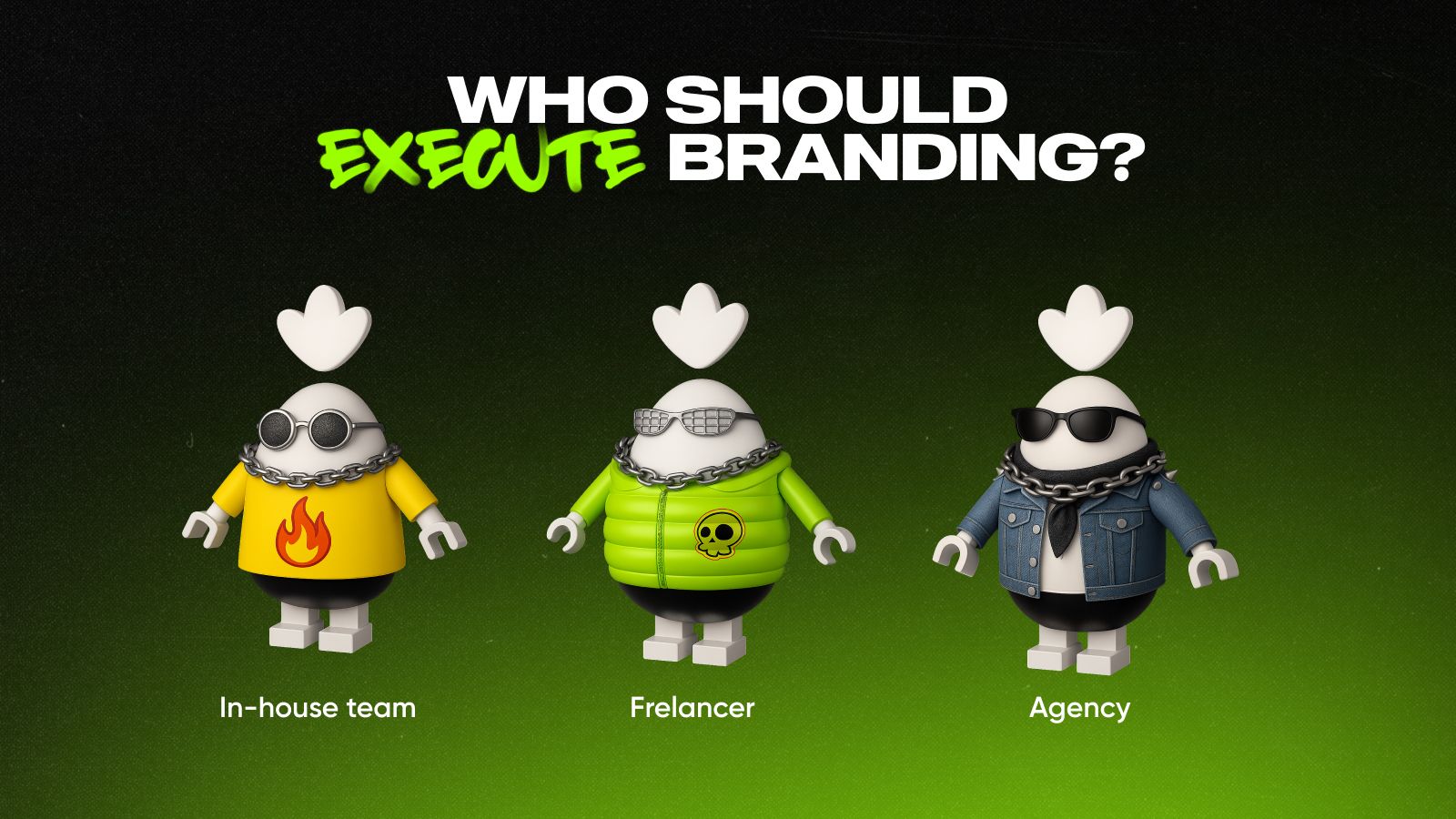
You can hire a freelancer for $2–5K—many early-stage companies do so (we listen, and we do judge, just a little). When branding budgets drop too low, the outcome usually feels like a junior execution: visual assets are produced without the depth required to support a growing company.
But branding is not a one-week task. It requires time, research, and a deep understanding of the product and the market.
Experienced branding teams don’t take a brief, send back a logo, and call it a day. They structure the process around discovery, exploration, and many iterations. They ask uncomfortable questions about positioning to challenge assumptions and see what actually helps you stand out. They test multiple directions before committing to one.
It’s less “design service,” more “strategic reality check.” Agencies know what a brand system needs to function long term—and how you’re going to implement it.
Many startups, let’s say, don’t have an in-house designer early on. A good branding partner anticipates this and delivers a toolkit (e.g., deck templates, standard social media layouts, and more) that helps the team scale independently. That way, the brand becomes operational and doesn’t just live in a PDF.
What branding actually includes (and why it’s way bigger than a logo)
Thinking branding is just visuals is like thinking architecture is just wall color.
A real brand identity is a structured system built in stages. Each stage answers a different business question: who are we for, what do we stand for, how do we communicate it, and how does it show up everywhere our company exists.
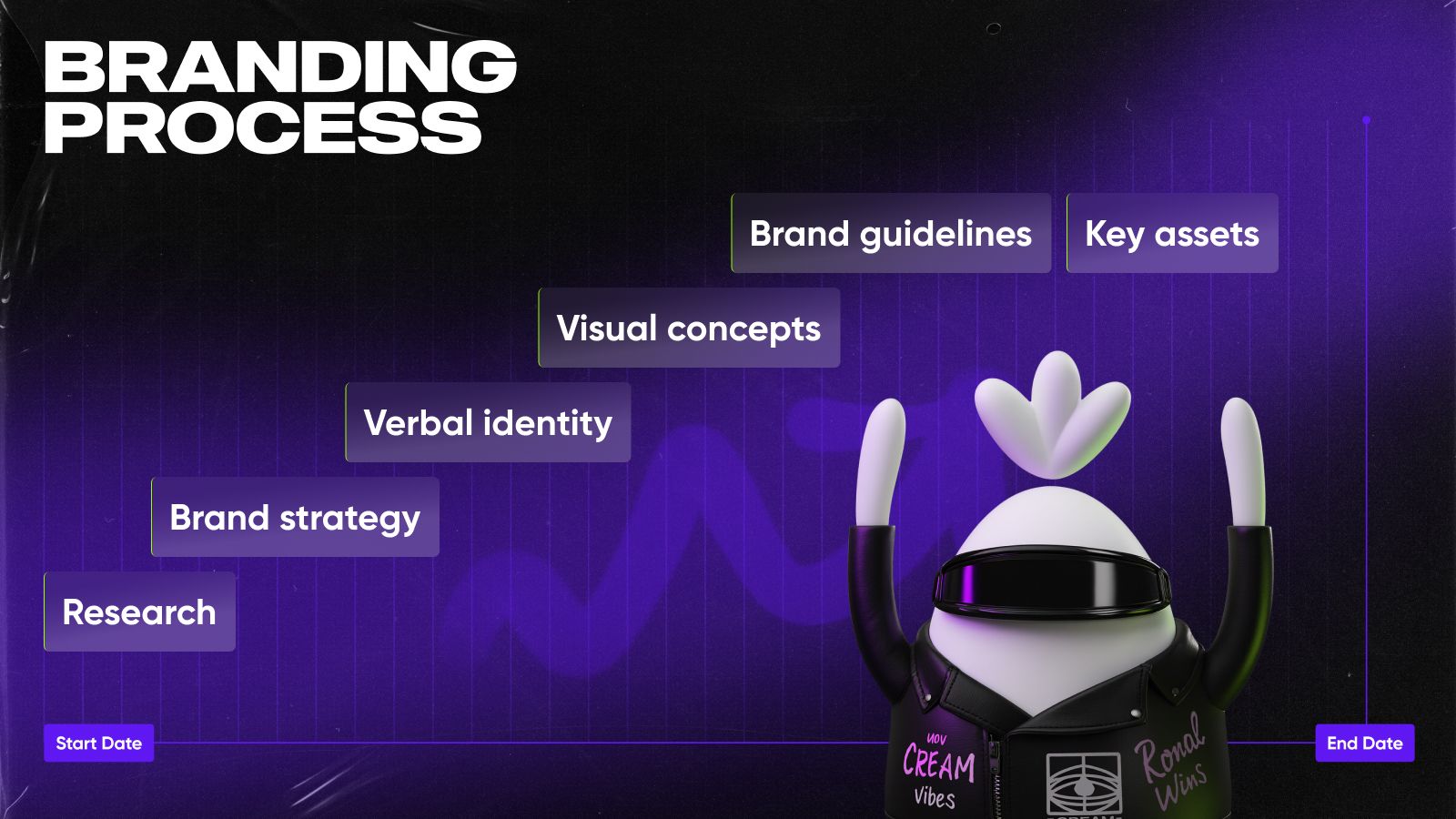
Stage 1. Brand strategy
The strategy answers the basics that shape how a company competes in the market:
- What problem are we truly solving?
- Who are we solving it for?
- What pain points does our audience have?
- Who else is solving the same problem in the market?
- Why should customers choose us over the dozens of alternatives?
- What is our power? How do we stand out?
This stage usually includes market research, competitive analysis, audience definition, and positioning work. A creative team analyzes how competitors present themselves, what visual and verbal territory is already occupied, and where there is space to stand out.
And then the brand core emerges: positioning, value proposition, and the narrative explaining why the company exists. These elements guide every decision that follows.
Without a strategy, branding tends to drift toward templates instead of differentiation.
Stage 2. Verbal identity
Once positioning is clear, the next step is defining how the brand speaks. Verbal identity is the brand’s language system. It defines the tone used in product interfaces, marketing copy, social media, and customer communication, how the company speaks about itself, or how it’s presented to others.
Must-haves here: tone of voice, messaging pillars, tagline/motto/slogan, and other comms that explain the brand’s value. It also includes linguistic rules: how formal the language should be, whether humor fits the brand, or how technical terminology should be handled.
The goal of verbal identity is consistency. When done well, the brand becomes recognizable even without visual cues.
Think about how companies like Slack or Mailchimp communicate. The tone is immediately identifiable in the tech field—even a simple product notification builds strong brand recognition.
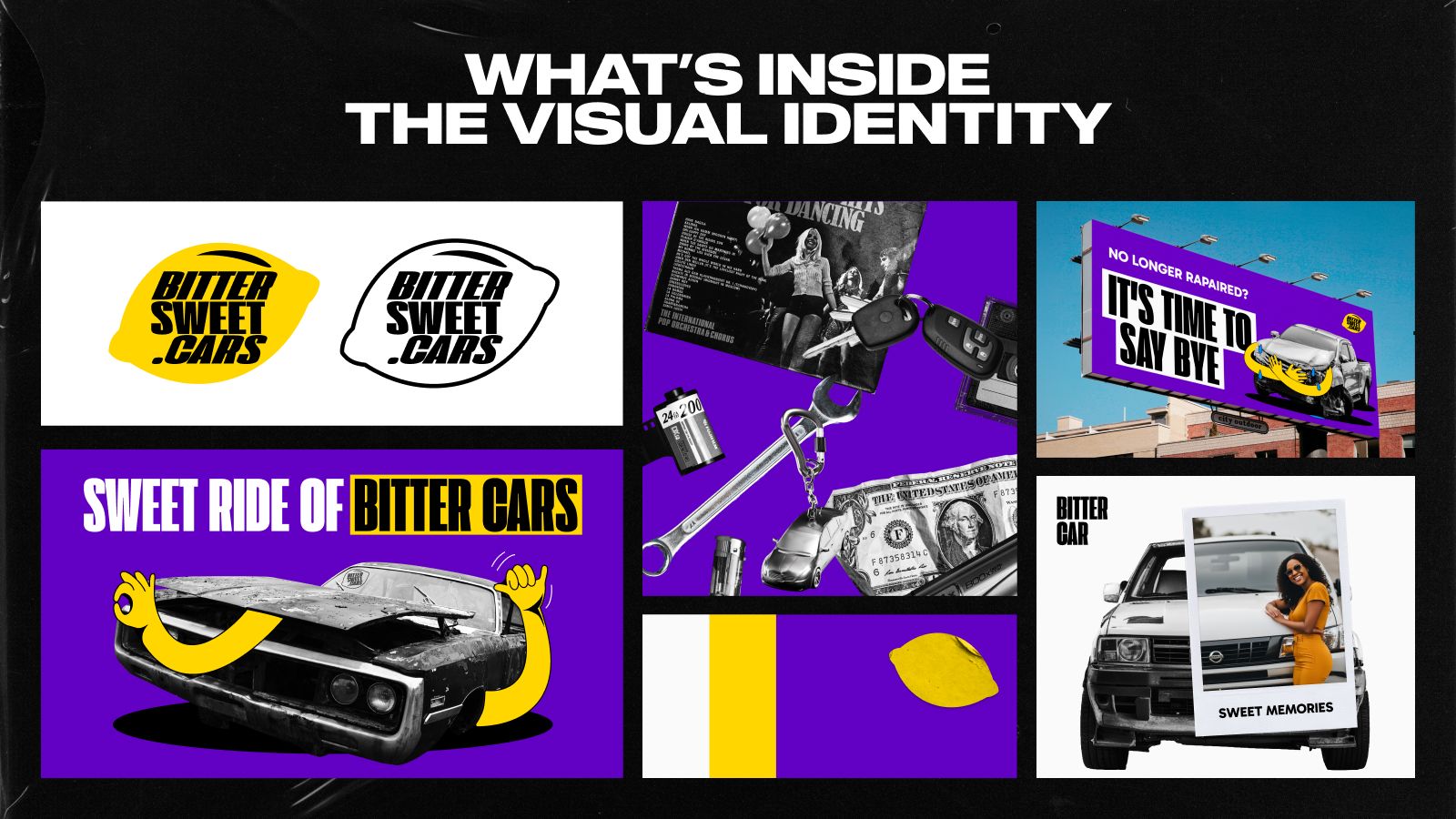
Stage 3. Visual identity
At its core, visual identity is a design system that includes:
- Logos and variations for different usage (primary logo, favicon, submark, partnership form, etc.).
- A typography system that includes primary and secondary typefaces and how they’re used.
- Color palette with defined hierarchies and accessibility rules.
- Graphic elements set: icons, 3D graphics, gradients, backgrounds, and illustrations.
- Photography and imagery with rules for photo treatment.
- Motion graphics: how elements animate, what transitions to choose, etc.
When all these components come together, the brand stops being a static design and becomes a flexible system that works across websites, apps, ads, presentations, and product interfaces.
This design system exists within one document that keeps everything consistent—the brand guidelines.
Guidelines translate strategy, language, and visual systems into a practical playbook for teams. They explain how an element should and shouldn’t be used, how it can scale across layouts, which color combinations to use, and which imagery to select or produce.
Good guidelines don’t just protect consistency—they accelerate work. Designers, marketers, and sales teams can make decisions faster because the framework is already in place. Without this documentation, brands inevitably fragment as different teams interpret the identity differently. And yes, low-cost branding usually doesn’t carry them.
Stage 4. Brand assets and implementation
The final stage is where the brand becomes operational and starts showing off.
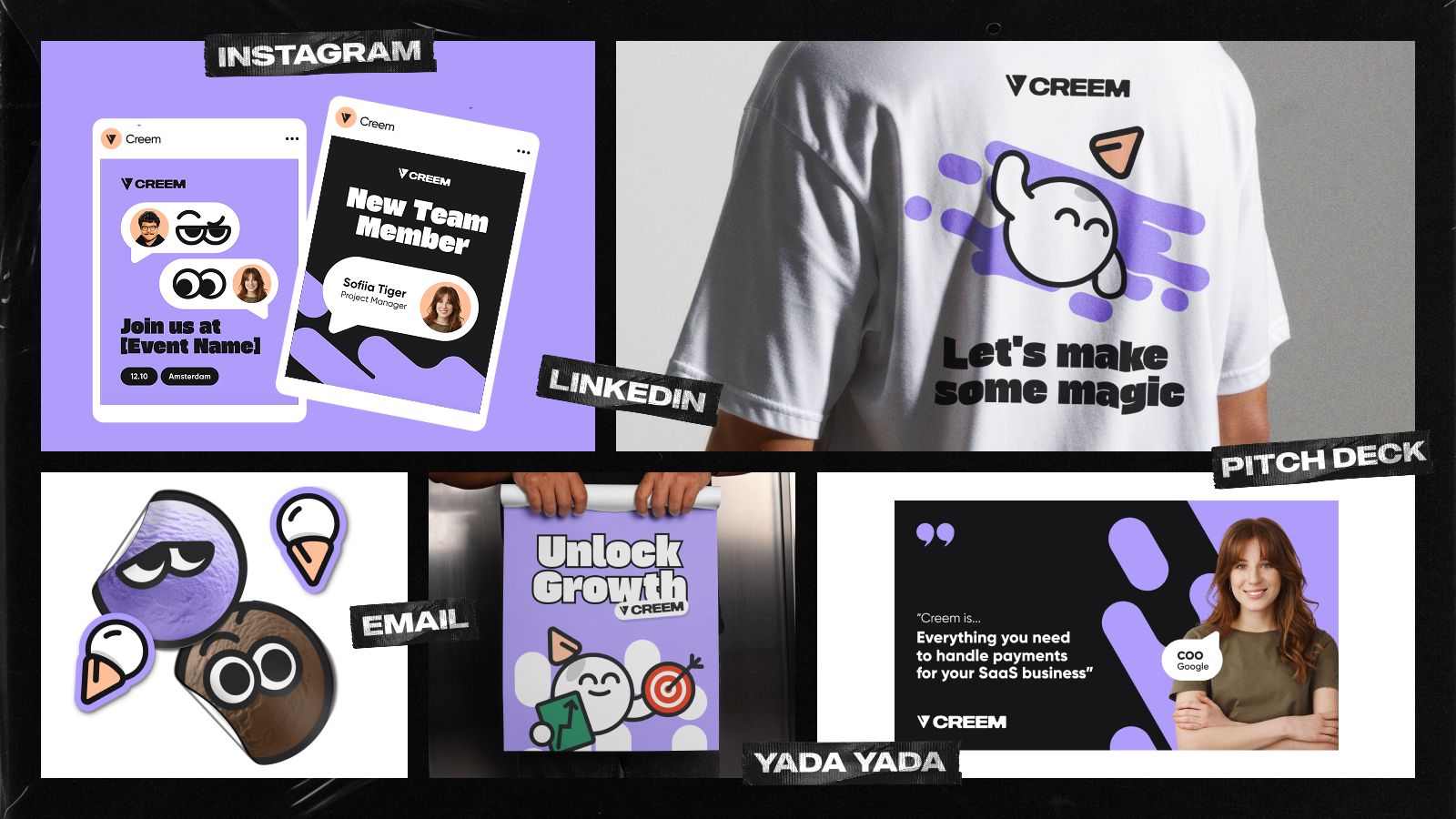
Once the identity system is set up, you start creating things that make it work in real-life business situations. They include:
- UI patterns
- Pitch deck templates
- Social media layouts
- Icon sets for the website
- Email designs
- And whatever else the brand needs
Though it’s often underestimated, this stage transforms branding from a concept into something the company can actually use.
What happens without proper branding
The cost of weak branding rarely shows up immediately. It catches you off guard, usually when the company is growing.
Imagine a typical early-stage startup. You allocate $5,000 for branding, which gets you a basic freelancer package: a logo, a few colors, a font pairing, and some icons. It’s enough to launch. You scale it to the website and comms, and your company starts growing. But the cracks begin to appear as the business scales.
Scenario one: brand value is lost
You’re preparing for a funding round. The product is solid, and the metrics look promising, but the brand still reads like a template from the company’s first month.
Investors review hundreds of startups every year. A weak brand won’t automatically kill a deal, but it subtly signals immaturity. The company might be good—but “good enough” doesn’t look like a market leader yet.
If that perception leads to even a 5–10% lower valuation, the financial impact is huge. For example:
- Expected round: $1M valuation.
- Actual valuation after negotiation: $500K.
That branding gap just cost $500,000 in equity value. Not because your product failed—because your brand didn’t carry its weight.
Scenario two: operational spends
Internally, things start breaking as well. As your marketing and sales teams grow, more people start creating materials, e.g., presentations, campaigns, ads, landing pages. Without a structured brand system, everyone improvises.
Sales decks are created in Google Presentations and lack branding. Social media looks different from the website. All ads look the same, and only the copy changes, because you went low budget in scope and chose only 3 examples.
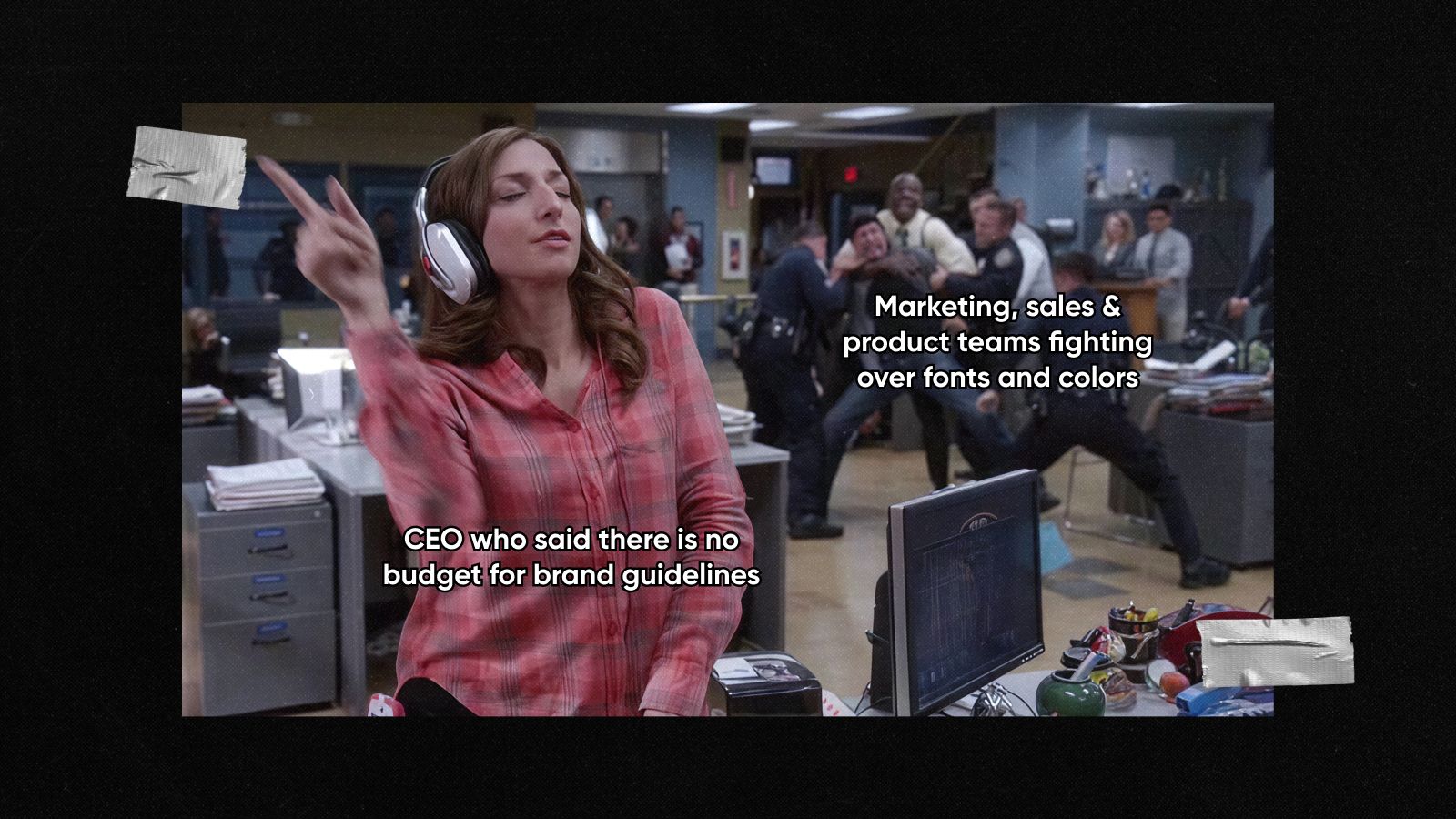
Eventually, the brand becomes fragmented, and teams spend more time fixing inconsistencies than producing new work. If a company has just 2 designers and 1 marketer, and each spends 10–15 hours per month fixing brand mess, that’s roughly 360–500 hours per year of lost productivity.
Let’s imagine a typical design rates $60–$100/hour. That’s $20K–$50K annually spent on avoidable rework.
Finally, the company realizes that the brand needs to be unified, leading to the inevitable solution: a full rebrand. And suddenly, that $5K branding decision turns into a six-figure correction. Because low-cost branding simply postpones the real cost until the company is bigger (and the stakes are higher).